
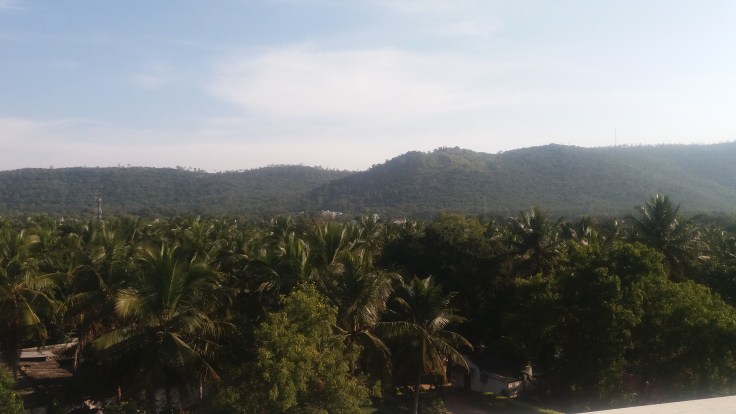
After a long and hot summer had come to an end, I headed East once more to engage in some ‘serious’ yoga for a month. During my Malta days I practised at a wonderful boutique yoga studio owned by an equally wonderful and adorable woman. For several years she has been nudging me to do a yoga teacher training course and recommended a good and affordable course she did herself. I’m not sure what took me so long but in October it was about to happen: I would be doing a 200 hours ashtanga yoga teacher training course in Mysore, India, home of ashtanga yoga.
Yoga: Western Idea vs Eastern Reality
If your idea of yoga includes concepts like peace, stillness and fluffy-duffiness, ashtanga yoga, and ashtanga yoga in India. especially, is something else At Hridaya, the yoga ashram I studied at in Mazunte, Mexico in the summer of 2017, one indeed practises the peace, love and self-reflection you might associate with yoga. Ashtanga yoga, however, can be described as a yoga boot camp powered by drive and flow. At ‘my’ yoga studio in Malta I practised Bikram, which is not ‘fluffy-duffy either and rather sweaty. In addition to Bikram I had done a few classes of ashtanga yoga in Panama. I knew this teacher training course was going to be quite tough, especially since I was a tat out of practice in terms of rigorous exercise. The course was not necessarily tougher than I thought, but I was quite surprised by the boot camp-yoga-torture nature of it.
What’s in a name
Ashtanga yoga means eight-limb union in Sanskrit and the structure of this yogic philosophy, was written down by an Indian sage named Patanjali. Not a lot is known about Patanjali, whether he really existed and if he did, whether he- or she- was more than one person. Most scholars, however, place Patanjali some time in the middle of the 2nd century BCE. Pantajali has penned down the essence of the eight-limbed yogic lore in 195 sutras, which means threads and could be translated as verses. What most people consider to be yoga, the postures, called asanas in Sanskrit, is only one limb of the eight-legged entity called ashtanga yoga. The other seven include the adherence of certain guidelines called namas and niyamas, breathing exercises called pranayama, meditation, and study. Patanjali didn’t mention any particular postures or asanas in his work. The man who brought ashtanga yoga asana practice to the attention of people in the west was K. Patthabi Jois, who started his first shala, or yoga house, in Mysore, India just after the second world war. His teachings reached a wider audience after a Belgium writer mentioned Patthabi Jois in his book ‘Yoga Self-Taught’ (original title: J’apprends le Yoga) published in 1967. Once the word was out, many westerns started to visit K. Patthabi Jois’ shala and he gathered a celebrity following. Whatever celebrities do, the masses tend to follow and ashtanga yoga asana practice became and remained a massive yoga hit. Rather than finding a meditative state in the stillness of holding a pose like in hatha yoga asana practice, ashtanga yoga asana practice is very much about dynamism and feeding the inner fire. The aim remains the same: samadhi, which can be translated as unification with the divine or enlightenment.
The Yogic Boot camp Approach
Although yogic lore prescribes ahimsa, which means non-harming, a few teachers at the shala I attended seem to believe it shouldn’t be applicable to any of their teaching styles. During asana practice I felt like I was in a ballet-boot camp of some sort as corrections towards the right form of the pose were made rather forcefully. The teaching style of other classes is quite traditional too with a strict teacher-student hierarchy very well-known to über-hierarchical Indian culture and society. I, however, grew up in the ‘don’t-you-think-you-are-better-than-anyone-else culture of the Netherlands and the teaching culture at the shala didn’t gel at all with my idea of how grown-up paying students should be treated. A newly made yoga girlfriend from Mangalore living in Mumbai, explained how stuff goes down in India. When you want to master something, you train with a guru, which just means teacher. This guru will show you some ‘tough love’ and you roll with it as you assume the guru has your best interest at heart. I don’t believe in ‘tough love’. I consider my parents to be good people and I had a very good secondary school education. However, the idea of ‘tough love’ reminds me too much of exactly those aspects in my upbringing and the way I have been force-fed knowledge that I don’t like.At.All.
Continuing the Yogic Path
Although not an entirely pleasant experience, I have to say I learnt a lot at the ashtanga yoga shala in Mysore and I have befriended some incredible people. Some of the teachers might have ‘scary’ teaching tactics, my sister and fellow students were very kind and supportive. Our ‘graduation ceremony’ was guided by a priest, who conducted a whole ritual before we got our certificates. Religious rituals seem very peculiar when these are foreign to you. In addition to practising yoga, the little slice of Indian life I have witnessed in that month loves worshipping too. An experience doesn’t necessarily have to be pleasant to be useful. This particular experience has not only deepened my practice and gave me a yoga teaching qualification. It also helped me refind the spark within to get shit moving forward again after having felt unfocused and diffused for several months. Walking the yogic path makes me very content and although not always easy, I plan to keep on walking until I am able to take off and fly.
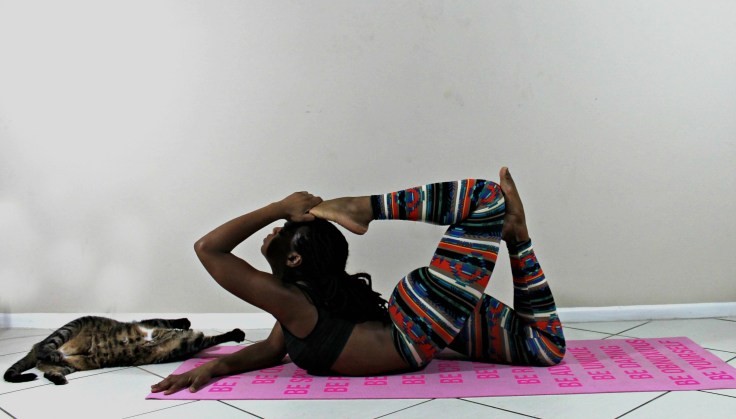
bottom image: beautyandthebeatblog.com
 Dark Fairy Adventures
Leave a comment