
After a few days of messy surf at the south coast, I returned to the capital Colombo in preparation for my flight to Europe. While consumed by surf in the last couple of months, I haven’t once mentioned the Sri Lankan elephant in the room; the civil war.
Up and Coming out of a War
The land of Ceylon tea- the plant is mainly cultivated for tourists and the export- hasn’t been on the (mass) tourist radar for that long. Although visitor numbers are increasing every year, the big touring companies haven’t found the Serendib island (yet). The reason that tourists and travellers have only been coming to Sri Lanka in significant numbers fairly recently, is because of an ugly thing called civil war.
Seeds of Hatred
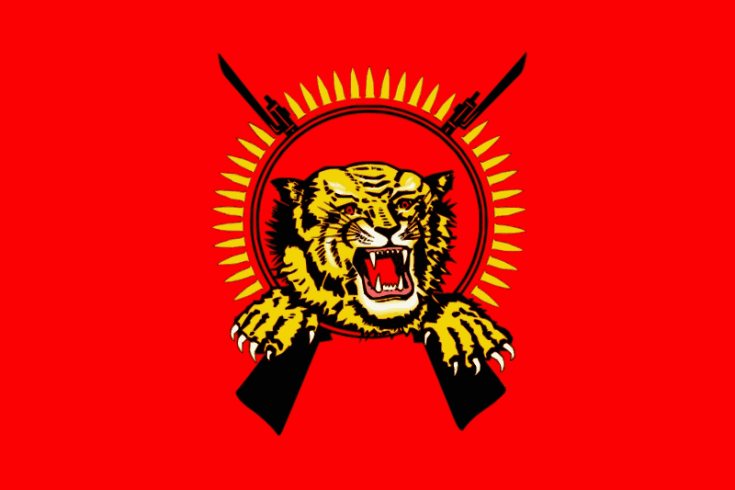
The Sri Lankan civil war, an armed struggle between the Sinhalese dominated government army and the Liberation Army of Tamil Eelam, or Tamil Tigers for short, raged from 1983 until 2009. The stage for this conflict was set during British occupation and the early years of independence just after the Second World War. Sri Lanka had always been an island, where different ethnicities and religions co-existed, and different regions were ruled by different foreign and domestic powers.
From the early 1800s Sri Lanka, then called Ceylan came under British rule and the Brits were the first and only foreign power, that ruled the entire island, bringing the island’s different ethnicities together under one administration. After Sri Lanka became independent in 1948, parliament passed the controversial Ceylon Citizen Act, which was considered discriminative against Indian Tamils. Indian Tamils had been recruited by the British in the 19th and the beginning of the 20th century to work on tea plantations in Sri Lanka. The Ceylon Citizen Act set as a requirement for Sri Lankan citizenship, that you could proof that you were at least a third generation migrant. This meant that you needed to be able to proof, that your father- not your mother- was born in Sri Lanka. As most Indian Tamil women would return to India to give birth, most Indian Tamils couldn’t submit such proof and were refused citizenship. In addition to Indian Tamils, who formed about 10 percent of the population at the time, the country also has a Sri Lankan Tamil population. These Tamils are mainly located in the North and East of the country and have been on the island for centuries. The effect of the 1948 Ceylon Citizen Act, was that most Indian Tamils had become stateless and hundreds of thousands were expelled and forced to return to India. Only in 2003 the Sri Lankan parliament passed a law giving all Indian Tamils, who had been in the country since at least October 1964 and their descendants the right to get Sri Lankan citizenship.
Language Thing and Militancy
In 1956 the then prime minister passed a law, that made Sinhalese, rather than English, the official language of the country. This is believed to have been a move to push Tamils out of the civil services, as many Tamils were not fluent in Sinhalese. Tension rose between the Sinhalese majority and the Tamil speaking minority, that included in addition to Sri Lankan and Indian Tamils, Sri Lankan Moors, who descent from Arab and Indian Muslim traders. In the late 1960s the idea of an independent Tamil state, Tamil Eelam, started to gain more traction. After more discriminating action towards the Tamil minority by the Sri Lankan state in the years that followed, Tamil youth in the North and the East became more militant and started to form armed opposition groups. The Tamil Tigers, became the most prominent of these groups by either merging with or getting rid of most other Tamil resistance groups. Quite a few Tamils opposed the actions and the goals of the Tamil Tiger, as many didn’t support the idea of an independent Tamil state and/or denounced violence. Some Tamils have worked for the government as part of paramilitary factions, while others had been active in ‘legitimate’ state politics. The Tamil tigers main resistance was aimed at elements of the state apparatus like politicians, especially Tamils, police officers and soldiers. These attacks were retaliated by the army, who killed far more civilians than armed fighters.
War what is it good for
In the almost 26 years of war, that ended with the surrender of the Tamil Tigers in May 2009, around 150,000 people, mainly civilians died as a direct result of the war. Many more fled the country and the war had a detrimental effect on Sri Lanka’s natural environment and economy. The risk of land mines still exists in rural areas of the north and the east of the island. The total cost of the war is estimated to have been 200 billion US dollars. In 2014 the UN attempted to have an investigation into war crimes, mainly committed by the government, yet the Sri Lankan state refuses to cooperate.
Tourism in Sri Lanka; more and uglier?
While I have been roaming and surfing the south coast and stayed in Arugam Bay in the Tamil-dominated East, I’ve seen no signs of a past war. Tourist- travellers are a relatively new phenomenon in the country and most locals seem very keen on foreigners having a good impression of their country and war doesn’t fit into that picture. To an outsider, Sri Lankans of all ethnicities seemingly get along without little problems. Since the war ended only 9 years ago, there must still be a lot of pain, anger and resentment. Being in my surfing- traveller bubble, I seldom asked locals questions about the war. After post-colonial unrest, civil war and natural disaster, Sri Lanka has become an attractive tourist- traveller destination once again. So much natural beauty, rich culture and many kind locals in wonderful weather is most definitely worth a visit. Tourist numbers have been increasing since the end of the civil war and there is no sign, that numbers will be falling any time soon. I just hope Sri Lanka will be smart about its tourism. As the country is relatively small and densely populated, it needs a solid infrastructure. Without one, tourism in Sri Lanka could get quite ugly indeed.
 Dark Fairy Adventures
Leave a comment