
While I am still residing in the state of Quintana Roo in the Caribbean part of Mexico, I have been escaping the pretentiousness of Tulum caused by the so-called Tuluminaties, many of which are from yankee decent. Tulum has been termed the Williamsburg of Mexico, Williamsburg being a trendy neighbourhood in Brooklyn, New York; a faux-eco chic resort for American hipsters and fake bohos. Besides that, in recent years real estate, managed and owned by Mexicans and foreigners alike – as far as Mexican law allows foreigners to own land- have been illegally confiscated by the state. This is done purely out of greed, as more pesos can be generated by building some more fancy resorts further diminishing any true hippy vibe that might have been left.
A Taste of Mayan Civilisation
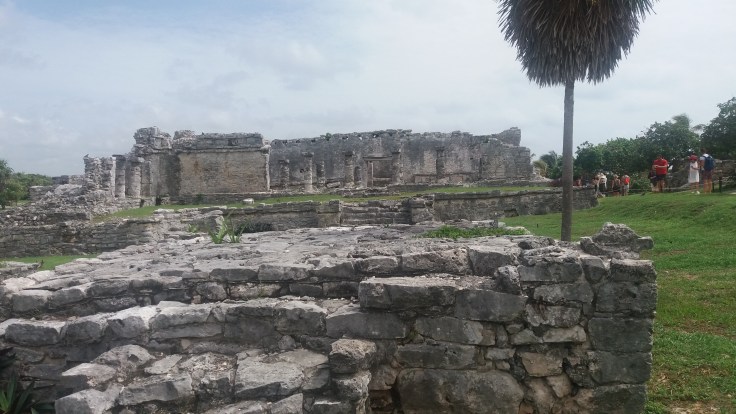
Besides terribly overpriced fake hippy bollocks, Tulum and the wider region do offer a few gems worth visiting. One of them being the famous Mayan site, consisting of ruins of a pre-Colombian settlement situated right at the coast. The city, one of the few walled cities the Mayans built, is argued to have been known as Zamá, which means City of Dawn as, the settlement looks out over the ocean in eastlerly direction. Zamá is considered to have been an important trading hub and a prosperous and well-protected city, besides being and important site of worship. The convention amongst archaeologists is, that the site was inhabited from the 6th century AD and was at its height between the 13th and 15th century housing up to 1600 inhabitants. The arrival of the Spanish at the end of the 16th century, lead to depopulation of the settlement by means of murder and disease. The site is housed in a well set-up archaeological park and the ruins are well-preserved and have, as you can imagine stunning views over the Caribbean Sea. The park houses a small beach for visitors to dip their toe into the sea and as the current can be strong, often it is not an awful lot more than that. As the site is very well-known, it’s rather touristy and it pays to come early to avoid the crowds. I spoke to travellers, who entered the park at sunrise, in August at about 6.30, for a truly magical experience and no, other visitors to annoy you.
Staying cool in the Jungle

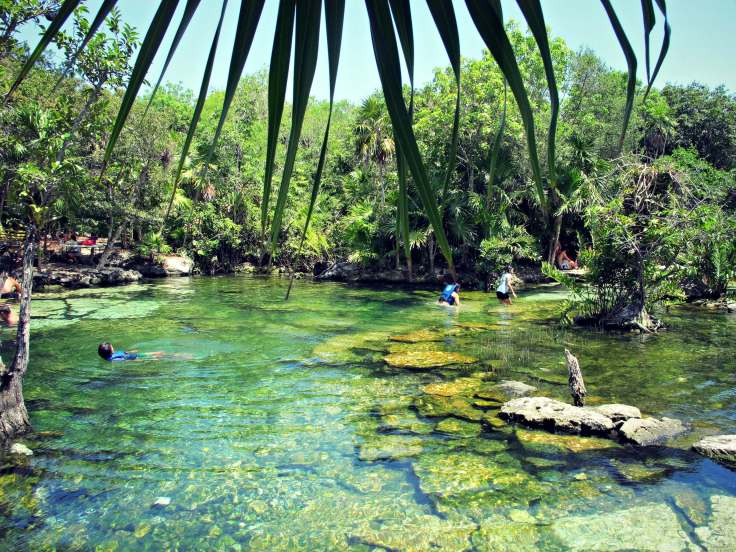
Another experience to be had around Tulum is having a dip into one of the many cenotes. A cenote, literally meaning ‘cave water’ in the Yucatec Mayan language, is a fresh water reservoir in limestone bedrock, usually of considerable depth, which gets its water from an underground river or stream. The term tends to be linked to these water deposits in the Yucatan peninsula, yet similar natural reservoirs have been found in other countries. It is said that cenotes were formed millions of years ago when the Yucatan peninsula was covered by sea water. When water levels started to decrease, a coral reef was exposed forming a limestone base. As limestone is porous, rain water was able to seep through the stone forming underground rivers. When the limestone base giving shape to the roof of a cave would collapse, the underground reservoir would be exposed, giving form to a cenote, most of which are cylindrical in shape and contain very clear water. The ancient Mayans had strong connection to these cenotes. Not only were they a water source, they were also used for religious practices and were considered portals to the underworld. According to Mayan mythology Aluxes- singular Alux- which are spirit-like creatures, comparable to gnomes in western legends, are guardians of these cenotes.
The cenotes around Tulum vary greatly in shape and size and many of them are part of a natural park, some bigger than others. These parks can be accessed by paying a fee, varying from €2.50 up to €15 for the larger parks. They are popular with locals and tourists alike and popular cenotes can get rather crowded at weekends and public holidays. Dipping, swimming or (free)diving into a cenote can be a great way to cool down on a hot and humid Caribbean day. It’s important to bring mosquito repellent, as in the more shaded and secluded spots the bugs are likely to eat you alive.
After cenote-cool I travelled to the tranquil, but still rather touristy island of Holbox (say Holbosh) at the north-eastern edge of the Yucatan peninsula. The beach is lovely and tranquil indeed, but considerable less chilled in the rain. As the island has no paved roads, exploring and even wandering around town in rainy season is also less idyllic, assuming you left your wellies (rain boots) at home. So off I went again like a true wandering Dark Fairy spirit.
Top image: playadelcarmen.com blog
bottom image: Kike Abed
 Dark Fairy Adventures
Leave a comment